
Smart Platform Interface
Smart Platform Interface for Railway Passenger Movement and Safety Automation
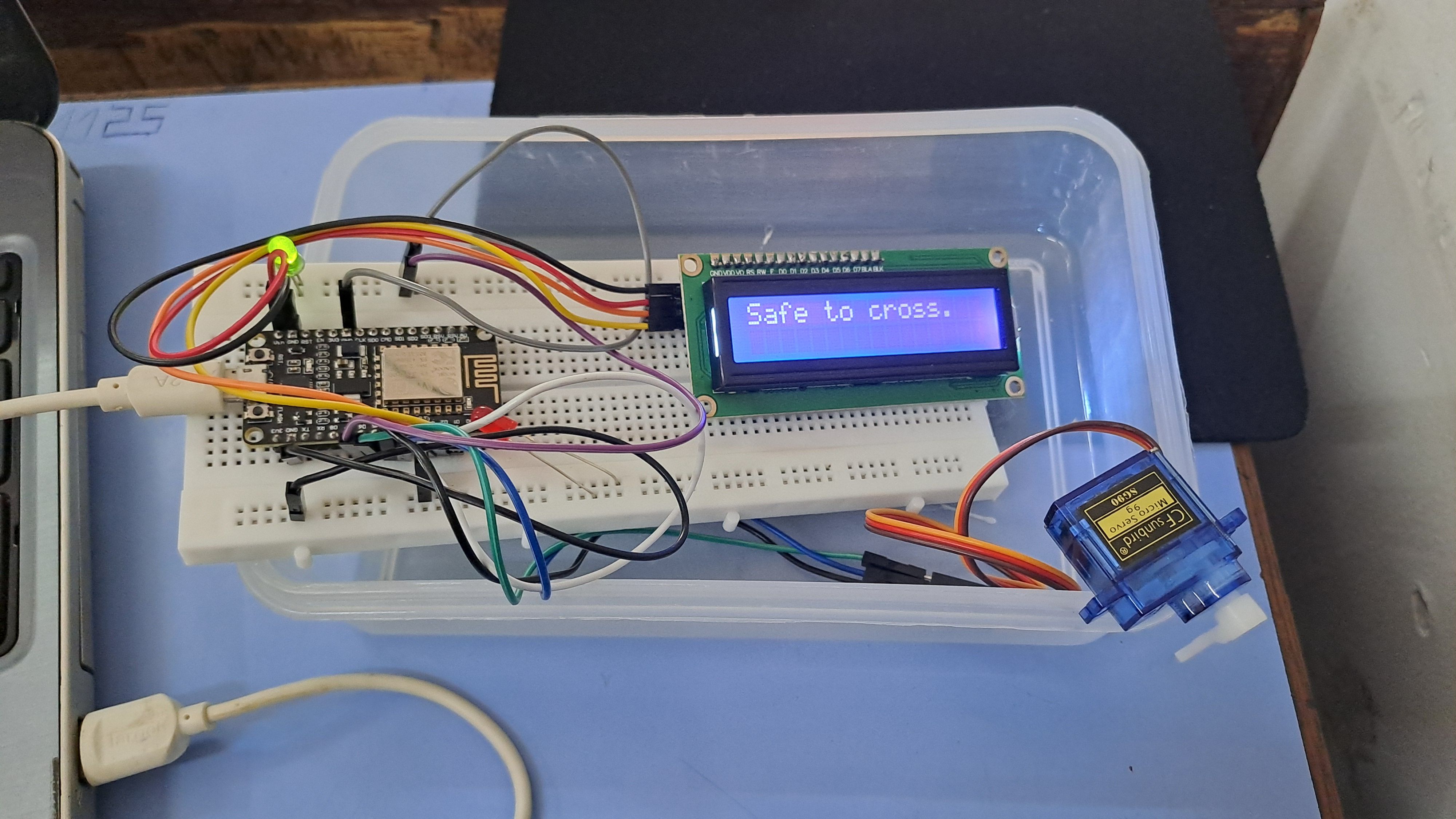
“Bypassing stairs and bridges, bridging safety with automated crossings.”
Problem Identified
Many busy railway stations struggle with passenger congestion, making transfers between platforms slow and risky. Without automated, real-time safety systems to guide passenger crossings, there is a constant risk of accidents when trains approach.
Concept Ideated
The goal was to replace traditional bridges and stairs, which are difficult for elderly, disabled, or heavy-load passengers to use. We wanted to design a flat crossing that slides out to bridge the platforms, but stays safe by using live cameras, YOLOv5 train detection, and distance-sensing algorithms to retract before a train arrives.
Solution Built
We built a smart platform crossing system that automates passenger movement between adjacent platforms. Using a NodeMCU microcontroller, servo motors, and computer vision, the platform slides into place to create a walkway when the tracks are clear, and automatically retracts to safety as soon as an approaching train is detected.
Key Contributions & Impact
Created a custom YOLOv5 object detection model to identify approaching trains under different lighting conditions.
Developed a distance estimation algorithm to calculate the train's proximity and speed.
Programmed NodeMCU firmware to synchronize servo motors, warning LEDs, and real-time LCD alerts.
Tested and validated the automated safety mechanism using custom datasets and performance metrics.
System Features & Functionality
Automated Train Detection
Identifies approaching trains under varying environmental conditions using YOLOv5.
Distance Prediction
Employs a custom algorithm for accurate real-time train proximity estimation.
Smart Platform Bridge
Motorized walkway controlled by a NodeMCU and servo motors.
Visual & Auditory Alerts
Integrates real-time safety warnings via warning LEDs and an LCD screen.
Safety-First Automation
Closes crossing gates and retracts the bridge automatically when a train enters the danger zone.