
Lunaris Rover
A rover that doesn’t just move, it understands terrain
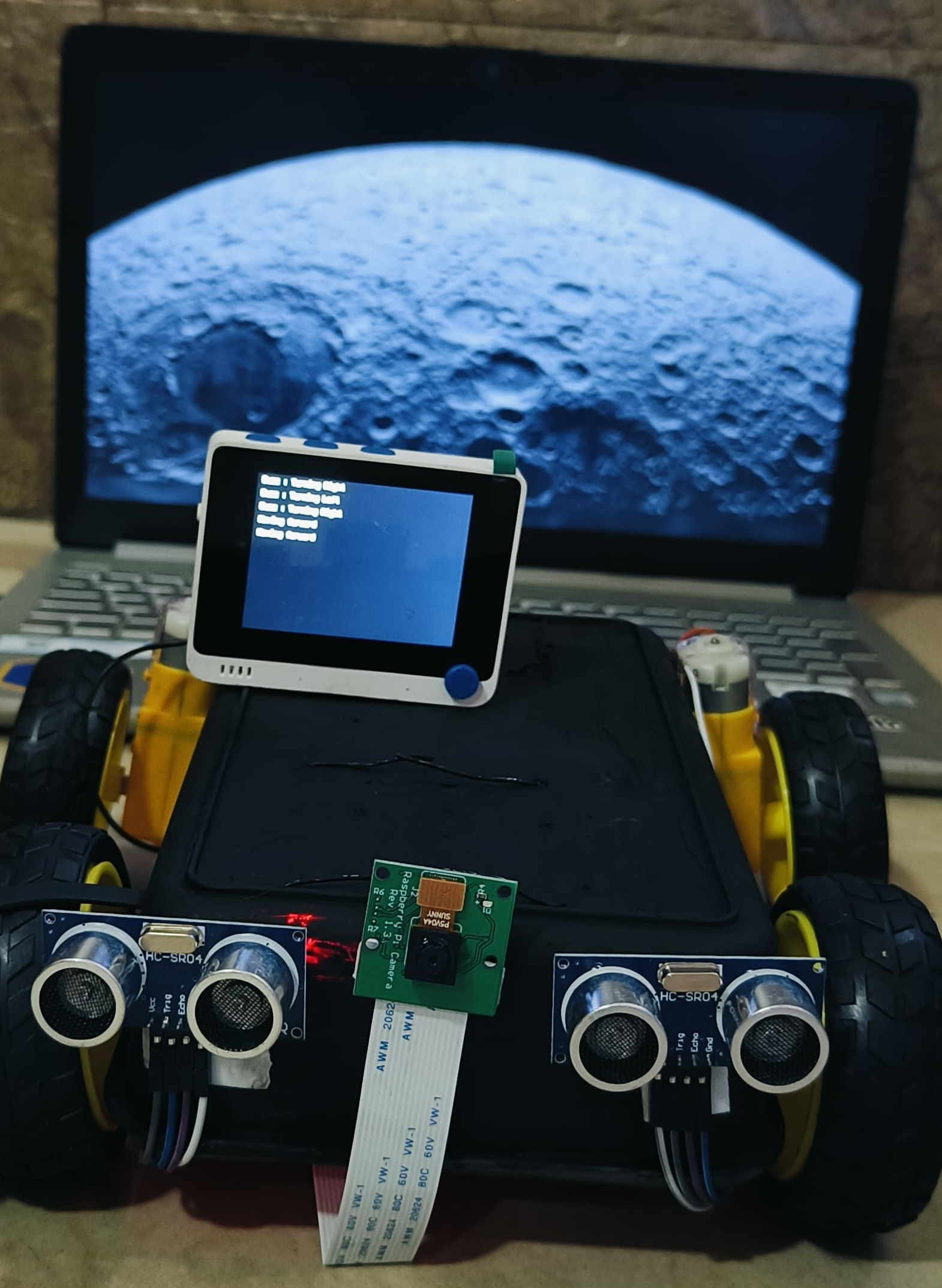
“A rover that doesn’t panic in the dark, it just adjusts its path and keeps exploring.”
Problem Identified
Lunar exploration systems struggle with low-light perception, unreliable terrain understanding, and limited onboard autonomy for safe navigation in unknown environments.
Concept Ideated
We wanted to build a physical prototype rover using accessible components that could mimic real space exploration tasks. The idea was to combine Raspberry Pi hardware with advanced software like YOLO object detection and MiDaS depth mapping so the rover could map its surroundings, enhance low-light camera feeds in real time, and navigate obstacles autonomously.
Solution Built
Built Lunaris, a rover system integrating low-light image enhancement, crater detection, and depth mapping using computer vision, alongside an IoT-enabled motor control system for real-time autonomous movement and obstacle-aware navigation.
Key Contributions & Impact
Designed low-light enhancement pipeline for lunar-like imaging conditions.
Implemented crater detection and depth estimation for terrain understanding.
Built IoT-based motor control system for real-time rover navigation.
Integrated obstacle detection for autonomous path adjustment.
System Features & Functionality
Autonomous Navigation
Detect and avoid obstacles using ultrasonic sensors.
Crater and Boulder Detection
Employ YOLO-based object detection for identifying geological features.
Depth Sensing
Generate depth maps using MiDaS for precise terrain analysis.
Low-Light Image Enhancement
Improve visibility in permanently shadowed regions (PSRs).
Wio Terminal Integration
Displays real-time data and provides auditory alerts during turns and obstacle detection.